
Crooked teeth, gaps or bite problems can make you hide your smile in photos and daily talks. Many people want straighter teeth, but they do not want metal braces. Yes, Invisalign can straighten teeth when the case is suitable and you wear the aligners properly. It uses clear, removable trays that move teeth step by step.
Asian Dental offers Invisalign care with experienced orthodontists, iTero 3D scanning and digital smile planning that shows your expected result before treatment starts. You also get clear guidance on wear time, cost and follow-up visits.
This guide is written by an expert dentist from Asian Dental to explain Invisalign improve your smile, how it works and when it gives the best results. Read on to know if Invisalign is the right choice for your teeth, smile and daily routine before you begin treatment with full confidence.
Does Invisalign Actually Straighten Your Teeth?
Yes, Invisalign can straighten teeth in mild to moderate cases. It works well for crowding, gaps and many bite problems when an orthodontist plans it correctly.
Invisalign has treated over 14 million people worldwide since 1997. Studies show strong results for suitable cases. The success depends on three things:
- Your case must suit aligners.
- You must wear them for 20 to 22 hours daily.
- Your orthodontist must plan tooth movement well.
Invisalign straighten teeth with custom clear trays. These trays apply gentle force and move teeth slowly. Invisalign working also depends on regular reviews, aligner tracking and proper retainer use after treatment.
How Does Invisalign Technology Move Your Teeth?
Invisalign uses SmartTrack material to apply soft and steady pressure on teeth. Each aligner can move teeth by about 0.25 to 0.33 mm over 1 to 2 weeks.
Tooth movement happens because bone changes around the root. One side of the tooth loses bone slightly. The other side forms new bone. This process is called bone remodeling.
Some teeth may need small tooth-colored bumps called attachments. These help the aligner grip the tooth and move it in the right direction.
Proven Ways Invisalign Transforms Your Smile
Invisalign improves your smile by moving teeth into better positions. It can correct crowding, close gaps, improve bite and keep oral care easier during treatment.
Corrects Crowding Through Gradual Space Creation
Invisalign can treat mild to moderate crowding up to about 6 mm. It creates space by widening the dental arch slightly or using IPR.
IPR means the dentist gently trims 0.2 to 0.5 mm between selected teeth. This gives space without removing teeth in many cases. For suitable crowding cases, Invisalign can avoid extractions and improve smile balance.
Closes Gaps Between Teeth Predictably
Invisalign can close small to moderate gaps between teeth. It works well for spacing up to around 6 mm in many patients.
The aligners guide teeth closer over time. Digital ClinCheck planning shows the expected tooth position before treatment starts. Gap-only cases may finish faster than braces in some patients, often around 8 to 12 months.
Fixes Bite Problems Beyond Alignment
Invisalign can help with mild overbite, crossbite, small underbite and minor open bite problems. The dentist may use elastics or precision cuts for better bite correction.
Patients looking for invisalign treatment in Hyderabad should choose a clinic that checks both teeth alignment and bite function. A better bite can improve chewing comfort and reduce uneven tooth pressure.
Maintains Better Oral Hygiene During Treatment
Invisalign is removable, so you can brush and floss normally. This makes daily cleaning easier than fixed braces.
With braces, food can get stuck around wires and brackets. With Invisalign, you remove the tray before eating. Then you brush, floss and wear it again. This helps lower cavity risk and keeps gums healthier.
Gives A Nearly Invisible Treatment Experience
Invisalign aligners are clear and hard to notice from normal talking distance. This helps adults, teens, working professionals and public-facing people feel more confident.
You can smile, speak and attend meetings without metal brackets showing. Many patients feel more comfortable during treatment because the aligners look simple and clean.
What Cases Does Invisalign Handle Successfully?
Invisalign works best when the tooth movement is planned within safe limits. Severe jaw or tooth position problems may still need braces or other treatment.
| Invisalign Treats Well | Not Suitable For |
| Mild to moderate crowding | Severe crowding needing extractions |
| Gaps between teeth | Very large tooth rotations |
| Minor overbite | Severe jaw mismatch |
| Crossbite in selected cases | Impacted teeth |
| Relapse after braces | Major vertical tooth movement |
| Adult smile correction | Poor wear-time commitment |
An orthodontist must check your teeth, bite and X-rays before confirming your case.
The Compliance Factor: Why 20 To 22 Hours Daily Wear Matters?
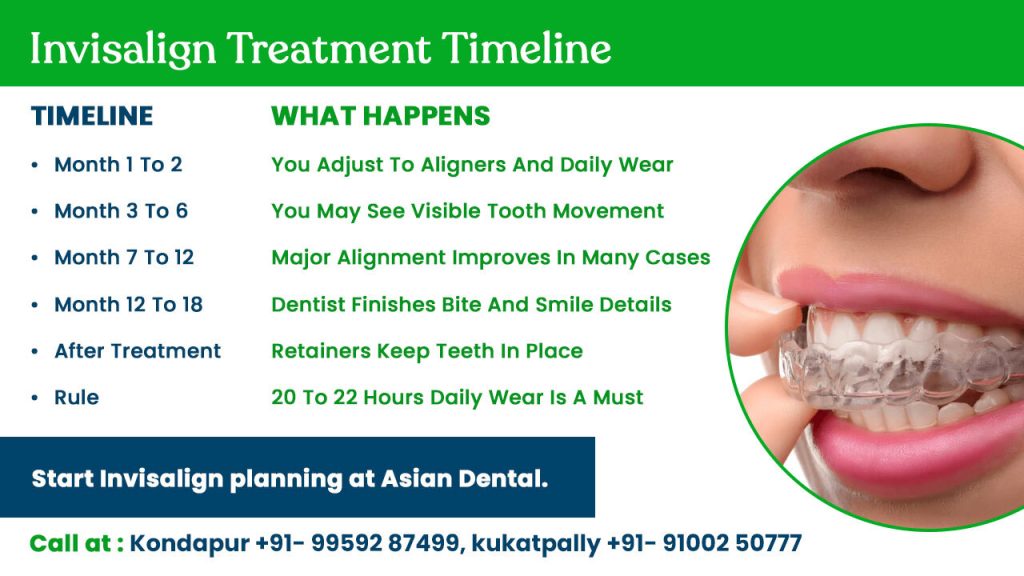
Invisalign works only when you wear the trays for 20 to 22 hours daily. You should remove them only while eating, drinking anything except water and brushing.
If you wear aligners for fewer hours, teeth may not move as planned. The trays may stop fitting well. Your dentist may ask you to wear an older aligner again or add extra refinement trays.
Simple habits help a lot. Keep your aligner case with you. Set phone reminders after meals. Brush before wearing the trays again. This keeps treatment on track.
Invisalign Vs Traditional Braces, What Is Right For You?
Both Invisalign and braces can give good results. The better choice depends on your case, age, budget and discipline.
Choose Invisalign if:
- You have mild to moderate teeth issues.
- You want a clear and removable option.
- You can wear aligners for 20 to 22 hours.
- You are 14 years or older.
- You play sports or travel often.
Choose braces if:
- You have severe crowding or tooth rotation.
- You may forget to wear aligners daily.
- You need complex bite correction.
- You want a lower-cost option.
- Your dentist feels fixed control suits your case better.
A digital scan helps compare both options clearly.
Cost And Value: Invisalign Investment In Hyderabad
Invisalign in Hyderabad may cost around ₹1,50,000 to ₹3,50,000 for full treatment. The price depends on case difficulty, number of aligners and treatment time.
This cost often includes digital scans, aligners, attachments, review visits, refinements and retainers. Invisalign may cost more than metal braces. Still, many patients choose it because it looks clear, allows normal brushing and needs fewer emergency visits.
If you search for the best dental hospital in Hyderabad, check whether the clinic offers iTero scans, clear pricing and orthodontist-led planning. These points affect your final result.
Get Expert Invisalign Treatment At Asian Dental
Asian Dental offers Invisalign treatment with orthodontist-led planning, iTero 3D scanning and clear ClinCheck previews before you start. Patients looking for the best dental clinic in Kondapur can visit Asian Dental for digital aligner care, transparent pricing and easy follow-up support. The team checks your teeth, bite and smile goals before suggesting aligners. You also get wear-time guidance, monthly monitoring and retainer planning after treatment. Invisalign can improve your smile only when planning and discipline work together. See your future smile before treatment begins.
Book an Invisalign consultation at Asian Dental today.
Kondapur No. +91- 99592 87499
kukatpally No. +91- 91002 50777
FAQs
Can Invisalign change my face shape?
Invisalign can improve smile balance and lip support in some cases. It will not change your whole face shape like jaw surgery.
Will Invisalign affect my speech?
You may speak with a slight lisp for a few days. Most people adjust within one week as the tongue gets used to the aligners.
Can I drink tea or coffee with Invisalign?
No, remove aligners before tea or coffee. Hot drinks can stain or bend the trays.
What happens if I lose one aligner?
Call your dentist quickly. They may ask you to wear the previous tray or move to the next one.
Do I need retainers after Invisalign?
Yes, retainers are needed after Invisalign. They stop teeth from moving back to old positions.


