
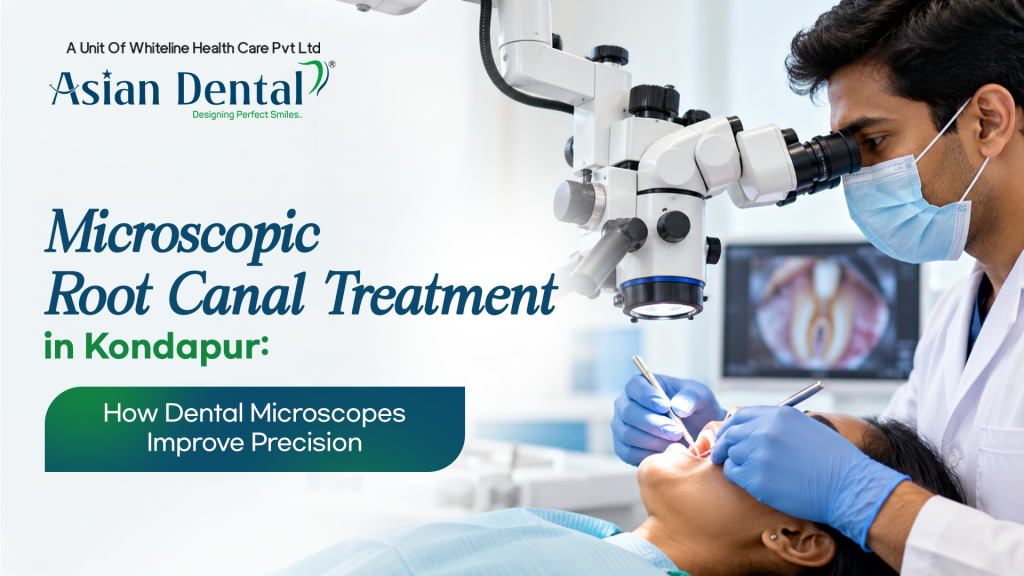
Root canal treatment helps save a natural tooth affected by deep decay, infection, or damage to the dental pulp. Modern dental technology has made this procedure more precise and effective. One such advancement is microscopic root canal treatment, which uses a dental operating microscope to provide a clear and magnified view of the inside of a tooth.
For patients looking for microscopic root canal treatment in Kondapur, this technique can be helpful in identifying tiny root canals, locating hidden areas, and treating complex dental problems. Asian Dental Hospital in Kondapur offers microscope-assisted root canal treatment as part of its advanced dental care services.
What Is Microscopic Root Canal Treatment?
Microscopic root canal treatment is an advanced approach to conventional root canal therapy. It uses a specialised dental operating microscope that magnifies the treatment area and provides better lighting.
Inside every tooth is a soft tissue called dental pulp, which contains nerves and blood vessels. When the pulp becomes infected or severely inflamed, root canal treatment may be necessary to save the tooth.
During the procedure, the dentist removes the infected pulp, cleans and disinfects the root canals, and seals them with a suitable filling material. The tooth may then require a permanent filling or dental crown.
A dental microscope helps the dentist see small details that may be difficult to identify with the naked eye. This can be particularly useful for teeth with narrow canals, curved roots, or complicated internal structures.
At Asian Dental Hospital, Kondapur, patients can consult a dentist to determine whether microscope-assisted root canal treatment is appropriate for their dental condition.
Why Is Root Canal Treatment Needed?
Root canal treatment may be recommended when the inner pulp of a tooth becomes infected or damaged. This can happen for several reasons.
Common causes include:
- Deep tooth decaythat reaches the pulp.
- Cracked or fractured teeth.
- Dental injuries caused by accidents.
- Repeated dental procedures on the same tooth.
- Untreated cavities that allow bacteria to spread.
- Infection or inflammation inside the tooth.
Some patients experience severe tooth pain, while others may have few noticeable symptoms. A dental examination and X-rays can help identify the problem.
Common symptoms that may indicate the need for root canal treatment include persistent toothache, sensitivity to hot and cold, pain while chewing, swelling around the gums, and darkening of a tooth.
If you notice these symptoms, consult a dentist promptly. Early diagnosis can help prevent the infection from becoming more serious.
How Do Dental Microscopes Improve Root Canal Precision?
Dental microscopes provide enhanced magnification and illumination during treatment. This helps dentists examine the internal structures of the tooth more closely.
1. Better Visibility Inside the Tooth
Root canals are very small and can be difficult to see clearly. Some teeth have additional canals that may not be easy to identify during a routine examination.
A dental microscope magnifies the treatment area and provides focused lighting. This allows the dentist to examine the root canal openings and surrounding structures more carefully.
Improved visibility can help the dentist plan and perform the procedure with greater precision.
2. Helps Identify Hidden Root Canals
Not all teeth have the same root canal structure. Some teeth contain extra canals, narrow passages, or unusual shapes.
If a canal is missed, bacteria may remain inside the tooth and potentially cause persistent infection.
Microscopic root canal treatment helps the dentist locate additional canals and examine complex internal anatomy. This can be especially helpful in difficult cases and during root canal retreatment.
3. Supports Careful Cleaning
Removing infected tissue and cleaning the root canal system are essential steps in root canal treatment.
The microscope helps the dentist see the treatment area more clearly while working with specialised instruments. This improved visual guidance can support careful cleaning and shaping of the canals.
However, magnification does not replace proper cleaning, disinfection, or the dentist’s clinical judgement. All these steps contribute to successful treatment.
4. Helps Detect Small Cracks and Other Problems
Tiny cracks, calcified areas, and changes inside a tooth can sometimes be difficult to identify without magnification.
A dental microscope may help the dentist examine suspicious areas more closely. Identifying these problems can support better treatment planning and help determine whether a tooth can be saved.
The dentist may also recommend additional imaging when necessary to understand the tooth’s condition.
5. Useful for Root Canal Retreatment
Sometimes, a tooth that has already undergone root canal treatment develops pain or infection again. This may happen because of persistent bacteria, missed canals, leakage around a restoration, or other complications.
In such cases, the dentist may recommend root canal retreatment.
Microscopic magnification can help the dentist locate previously untreated canals, inspect the existing root canal filling, and identify certain complications. This can be useful when planning treatment for a previously treated tooth.
What Is the Procedure for Microscopic Root Canal Treatment?
The procedure generally follows the same basic steps as conventional root canal treatment, with the added benefit of magnification.
Step 1: Dental Examination
The dentist examines the affected tooth, discusses your symptoms, and reviews your dental history. Digital X-rays may be taken to evaluate the roots and surrounding bone.
Step 2: Local Anaesthesia
Local anaesthesia is used to numb the affected tooth and surrounding area. This helps make the procedure more comfortable.
Step 3: Accessing the Root Canals
The dentist creates a small opening in the tooth to reach the pulp chamber. The dental microscope helps provide a clearer view of the canal openings.
Step 4: Removing Infected Tissue
The damaged or infected pulp is removed using specialised dental instruments.
Step 5: Cleaning and Shaping
The root canals are carefully cleaned, shaped, and disinfected to remove infected tissue and reduce bacteria.
Step 6: Sealing the Root Canals
Once the canals have been properly cleaned and prepared, they are filled with a suitable material and sealed to help prevent reinfection.
Step 7: Restoring the Tooth
The dentist places a permanent restoration, such as a filling or crown, depending on the amount of remaining tooth structure and the tooth’s location.
Completing the final restoration as recommended is important for protecting the treated tooth.
What Are the Benefits of Microscopic Root Canal Treatment?
Microscopic root canal treatment offers several potential advantages, particularly in complex cases.
- Improved visibility:Magnification helps the dentist examine small structures inside the tooth.
- Better identification of canals:Additional or hidden canals may be easier to locate.
- Greater precision:Enhanced visual guidance supports careful work inside the tooth.
- Help with complex cases:Microscopes can be useful for narrow canals, unusual anatomy, and retreatment.
- Natural tooth preservation:Root canal treatment aims to retain the natural tooth whenever it can be restored.
- Detailed examination:The dentist can inspect specific areas more closely during treatment.
The benefits depend on the condition of the tooth, the complexity of the case, and the dentist’s skills. A microscope does not guarantee that every root canal will succeed, but it can be a valuable tool in appropriate cases.
Is Microscopic Root Canal Treatment Painful?
Many patients worry that root canal treatment will be painful. However, modern root canal procedures are generally performed under local anaesthesia, which helps minimise discomfort during treatment.
Some tenderness or mild sensitivity may occur after the procedure. This usually improves as the tissues recover.
If you experience severe pain, increasing swelling, fever, or symptoms that do not improve, contact your dentist for an assessment.
At Asian Dental Hospital in Kondapur, patients can discuss their concerns and understand the procedure before starting treatment.
How Many Appointments Are Required?
The number of appointments depends on the tooth’s condition and the complexity of the root canal system.
Some straightforward cases can be completed in a single visit. Other cases may require multiple appointments, particularly when there is significant infection, complex anatomy, or a need for retreatment.
The dentist will determine the appropriate treatment schedule after examining the tooth.
Who May Need Microscopic Root Canal Treatment?
Microscopic root canal treatment may be recommended for patients with:
- Narrow or calcified root canals.
- Additional or difficult-to-locate canals.
- Curved or complex root anatomy.
- Persistent infection after previous treatment.
- A tooth that requires root canal retreatment.
- Certain cracks or complications that need closer examination.
Not every patient requires microscope-assisted treatment. Your dentist will recommend the most suitable approach based on your symptoms, examination, and diagnostic findings.
Why Choose Asian Dental Hospital in Kondapur?
Choosing a dental hospital with appropriate technology and experienced dental professionals is important when you need root canal treatment.
Asian Dental Hospital, Kondapur, provides root canal treatment and microscope-assisted dental procedures. Its dental facilities include a digital operating microscope and other diagnostic technologies to support treatment planning.
Patients can discuss their symptoms, the recommended procedure, expected appointments, and the type of restoration required after treatment.
The dental team can also explain whether conventional root canal treatment or a microscope-assisted approach is more appropriate for the individual case.
For patients searching for microscopic root canal treatment in Kondapur, a consultation at Asian Dental Hospital can help identify the cause of tooth pain and determine the available treatment options.
How to Care for Your Tooth After Root Canal Treatment
Following your dentist’s instructions can help protect the treated tooth and support recovery.
- Avoid chewing hard foods on the treated tooth until your dentist confirms it is safe.
- Brush twice daily using a soft-bristled toothbrush.
- Clean between your teeth with floss or another recommended cleaning aid.
- Complete the permanent filling or crown as advised.
- Attend follow-up appointments when recommended.
- Contact your dentist if pain, swelling, or other unusual symptoms develop.
A root canal-treated tooth still requires regular dental care. Maintaining good oral hygiene and attending routine check-ups can help protect your teeth and gums.
Frequently Asked Questions
1. What is microscopic root canal treatment?
Microscopic root canal treatment uses a specialised dental microscope to magnify and illuminate the inside of a tooth. It helps the dentist examine root canals more clearly and perform treatment with greater precision.
2. Is microscopic root canal treatment better than conventional treatment?
Microscopic treatment can be especially helpful in complex cases because it improves visibility. However, both approaches can be effective when performed correctly. The most suitable option depends on the tooth’s condition.
3. How much does microscopic root canal treatment cost in Kondapur?
The cost depends on the type of tooth, the complexity of the root canals, the severity of infection, and the final restoration required. Contact Asian Dental Hospital for a consultation and an estimate based on your dental needs.
4. Can a microscope help during root canal retreatment?
Yes. A dental microscope can help the dentist locate missed canals, inspect the existing treatment, and examine certain complications more closely during retreatment.
5. Will I need a crown after microscopic root canal treatment?
A crown may be recommended depending on the tooth’s location and the amount of remaining tooth structure. Your dentist will assess the tooth and explain whether a crown or another restoration is needed.
Final Thoughts
Microscopic root canal treatment improves visibility inside the tooth, helping dentists examine small canals and manage complex dental problems with greater precision. It can be particularly useful when a tooth has unusual root anatomy or requires retreatment.
If you have persistent tooth pain, sensitivity, or swelling, do not delay a dental examination. Early diagnosis can help you understand the available treatment options and protect your oral health.
Book your dental consultation at Asian Dental Hospital, Kondapur. Call +91 99592 87499 to enquire about an appointment.