
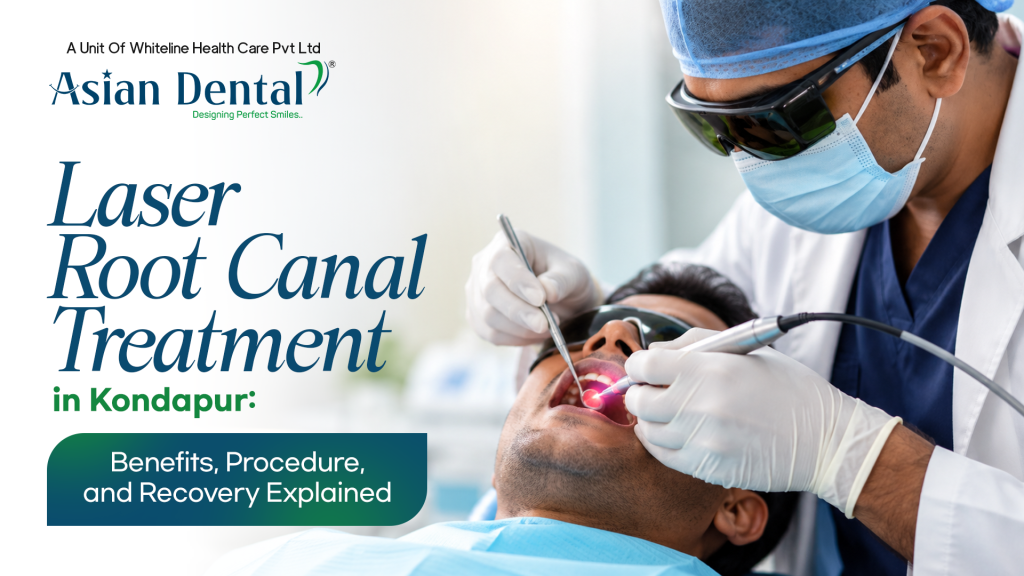
Tooth pain, sensitivity to hot or cold foods, and swelling around the gums can sometimes indicate an infection inside a tooth. When the inner pulp becomes infected or damaged, root canal treatment may be recommended to remove the infection and save the natural tooth. With advancements in dental technology, laser-assisted root canal treatment has become an option for improving cleaning and disinfection during the procedure.
If you are looking for laser root canal treatment in Kondapur, understanding its benefits, procedure, and recovery can help you make an informed decision. At Asian Dental Hospital, patients can consult a dental professional to understand their tooth condition and explore suitable root canal treatment options.
This blog explains how laser-assisted root canal treatment works, who may need it, and what to expect before and after the procedure.
What Is Laser Root Canal Treatment?
Laser root canal treatment is a dental procedure that uses laser technology as an additional method to help clean and disinfect the root canal system. The root canal contains soft tissue known as the dental pulp, which includes nerves and blood vessels. When this tissue becomes infected due to deep tooth decay, cracks, or injury, treatment may be necessary.
During conventional root canal treatment, the dentist removes infected pulp tissue, cleans and shapes the root canals using specialised instruments, disinfects the area, and seals the canals with a suitable filling material.
In laser-assisted treatment, dental laser technology may be used alongside these standard techniques to help reduce bacteria in areas that are difficult to reach with conventional instruments alone.
It is important to understand that laser technology does not replace every step of root canal treatment. The appropriate approach depends on the tooth’s condition, the extent of the infection, and the dentist’s clinical assessment.
Why Is Root Canal Treatment Necessary?
A root canal may be recommended when the pulp inside a tooth becomes inflamed or infected. If the problem is left untreated, the infection can spread to surrounding tissues and cause additional complications.
Common reasons for needing root canal treatment include:
- Deep tooth decay:Bacteria can reach the pulp when cavities become severe.
- Cracked or damaged teeth:Cracks may allow bacteria to enter the inner part of the tooth.
- Dental injuries:An accident or impact can damage the pulp, even if the tooth appears intact.
- Repeated dental procedures:Extensive dental work on the same tooth can sometimes affect the pulp.
- Tooth abscess:An infection may cause pus to collect around the tooth root.
Common symptoms include persistent toothache, pain while chewing, sensitivity that lingers after exposure to hot or cold foods, gum swelling, and darkening of the affected tooth. Some infected teeth may not cause noticeable pain.
If you experience these symptoms, consult a dentist for an examination rather than waiting for the pain to become severe.
Benefits of Laser Root Canal Treatment
Laser-assisted root canal treatment may offer several advantages when used appropriately as part of a comprehensive dental procedure.
1. Improved Disinfection
Laser energy can help reduce bacteria within the root canal system. This can support the cleaning and disinfection process, although the outcome depends on the technique used and the nature of the infection.
2. Access to Complex Areas
Root canals can have narrow spaces, curves, and complex internal anatomy. Laser-assisted techniques may help disinfect areas that are challenging to clean using conventional instruments alone.
3. Potentially Less Tissue Irritation
When used correctly, laser technology may help limit unnecessary irritation to surrounding tissues. However, results vary, and the benefits depend on the equipment, settings, and clinical situation.
4. Comfortable Treatment Experience
Modern root canal procedures are generally performed using local anaesthesia to manage pain during treatment. Laser technology may improve certain aspects of the procedure, but it does not guarantee a completely painless experience.
5. Support for Preserving Natural Teeth
The main objective of root canal treatment is to remove infected tissue and preserve the natural tooth whenever possible. Laser-assisted disinfection can be an additional tool in achieving this goal.
6. A Minimally Invasive Approach in Selected Cases
Laser technology may support specific stages of treatment without requiring unnecessary removal of tooth structure. The dentist will determine the appropriate treatment method based on the tooth’s anatomy and condition.
Step-by-Step Procedure for Laser Root Canal Treatment
If you are considering laser root canal treatment in Kondapur, knowing the stages of treatment can help you feel more prepared.
Step 1: Dental Examination and Diagnosis
The dentist examines the affected tooth, checks for signs of infection, and may recommend dental X-rays to assess the roots and surrounding bone. These findings help determine whether root canal treatment is necessary.
Step 2: Local Anaesthesia
Local anaesthesia is usually administered to numb the affected area. This helps make the procedure more comfortable while the dentist works on the tooth.
Step 3: Accessing the Root Canal
A small opening is created in the tooth to reach the pulp chamber. The infected or damaged pulp tissue is then removed using appropriate dental instruments.
Step 4: Cleaning and Shaping the Canals
The root canals are carefully cleaned and shaped to remove infected tissue and prepare the spaces for filling. Specialised instruments and disinfecting solutions are essential parts of this process.
Step 5: Laser-Assisted Disinfection
When clinically appropriate, the dentist uses a dental laser as an additional disinfection method. The laser is applied using suitable equipment and settings to help reduce bacteria within the root canal system.
Step 6: Filling and Sealing
After cleaning and disinfection, the canals are filled with a biocompatible material and sealed to help prevent reinfection.
Step 7: Final Restoration
Depending on the amount of tooth structure remaining, the dentist may place a permanent filling or recommend a dental crown. A crown may be particularly important for teeth that have lost substantial structure because it helps protect them from fractures.
The number of appointments depends on the complexity of the case, the severity of the infection, and the treatment plan.
Who May Need Laser Root Canal Treatment?
Laser-assisted root canal treatment may be considered for patients with conditions such as:
- Deep cavities affecting the dental pulp.
- Persistent tooth pain caused by pulp inflammation or infection.
- Infection around the root of a tooth.
- Tooth damage caused by trauma.
- Teeth that require additional canal disinfection.
Not every patient needs laser-assisted treatment. In many cases, conventional root canal treatment is effective when performed properly. Your dentist can explain whether laser technology offers a meaningful benefit for your specific condition.
Recovery After Laser Root Canal Treatment
Recovery is usually manageable, although some tenderness or discomfort may occur after the procedure.
First 24 Hours
The treated tooth and surrounding tissues may feel tender once the anaesthesia wears off. Avoid chewing until normal sensation returns, particularly to prevent accidentally biting your cheek or tongue.
First Few Days
Mild discomfort when biting or chewing may continue for a few days. Follow your dentist’s instructions and take prescribed or recommended medication only as directed.
Eating and Drinking
Choose soft foods such as curd rice, soft vegetables, eggs, and other easy-to-chew meals during the initial recovery period. Avoid hard, sticky, or crunchy foods that could damage a temporary filling or weaken a treated tooth.
Oral Hygiene
Brush gently twice daily and continue cleaning between your teeth. Keeping the area clean helps maintain good oral health during recovery.
Follow-Up Appointment
Attend your scheduled dental appointments to ensure the tooth is healing properly. If a permanent crown or filling is recommended, complete the restoration according to your dentist’s advice.
Contact your dentist if you experience increasing pain, significant swelling, fever, or symptoms that worsen instead of improving. Difficulty swallowing or breathing requires immediate emergency medical attention.
Laser Root Canal Treatment Cost in Kondapur
The cost of laser root canal treatment in Kondapur varies according to several factors. There is no single price that applies to every patient.
Factors affecting the cost include:
- The type and location of the affected tooth.
- The number and complexity of root canals.
- The severity of the infection.
- Whether laser-assisted technology is required.
- The number of appointments needed.
- Whether a permanent filling or dental crown is required.
Molars may require more complex treatment than some front teeth because they often have multiple canals. Additional procedures may also affect the overall cost.
For an accurate estimate, consult a dentist who can examine your tooth and explain the treatment plan. At Asian Dental Hospital, patients can enquire about available root canal treatment options, the role of laser technology, and the expected treatment expenses.
Why Choose Asian Dental Hospital?
Choosing the right dental provider is important when you need treatment for an infected or damaged tooth. A proper diagnosis, careful cleaning, appropriate disinfection, and a suitable final restoration all contribute to the treatment outcome.
At Asian Dental Hospital, patients seeking dental care in Hyderabad can consult the dental team about tooth pain, root canal procedures, and available treatment options.
When choosing a provider for laser-assisted root canal treatment, consider the following:
- A thorough dental examination and diagnosis.
- Clear explanations of conventional and laser-assisted procedures.
- Appropriate sterilisation and infection-control practices.
- A personalised treatment plan based on your dental condition.
- Follow-up care and guidance on protecting the treated tooth.
Before starting treatment, ask whether laser technology is appropriate for your case and what benefits it is expected to provide.
Tips to Prevent Future Root Canal Problems
Although root canal treatment can help save an infected tooth, preventive dental care remains important.
- Brush twice daily with fluoride toothpaste.
- Clean between your teeth every day.
- Limit frequent consumption of sugary foods and drinks.
- Visit your dentist regularly for check-ups.
- Treat cavities early before they reach the dental pulp.
- Wear a mouthguard when recommended for sports or teeth grinding.
- Avoid using your teeth to open packages or bite hard objects.
Early diagnosis can help prevent minor dental problems from progressing into more serious infections.
Final Thoughts
Laser-assisted root canal treatment can be a useful option for helping disinfect infected root canals while preserving natural teeth. Its suitability depends on the condition of the tooth and the dentist’s assessment. Conventional cleaning, proper sealing, and a suitable final restoration remain essential parts of successful root canal treatment.
If you are experiencing tooth pain, prolonged sensitivity, or gum swelling, seek professional dental advice rather than delaying treatment. For those exploring laser root canal treatment in Kondapur, Asian Dental Hospital is an option to contact for information about available procedures and personalised treatment planning.
With timely diagnosis, appropriate treatment, and good oral hygiene, it may be possible to preserve your natural tooth and maintain your oral health.
Frequently Asked Questions (FAQs)
1. What is laser root canal treatment?
Laser root canal treatment uses dental laser technology as an additional method to help disinfect the root canal system. It is generally performed alongside conventional cleaning, shaping, filling, and sealing techniques.
2. Is laser root canal treatment painful?
Local anaesthesia is usually used to manage pain during the procedure. Some tenderness may occur afterwards, but the level of discomfort varies from person to person.
3. How long does laser root canal treatment take?
The duration depends on the affected tooth, the number of canals, and the complexity of the infection. Some cases can be completed in one appointment, while others require multiple visits.
4. What is the cost of laser root canal treatment in Kondapur?
The cost depends on the tooth involved, the complexity of treatment, the use of laser technology, and whether a crown is needed. Contact Asian Dental Hospital for an assessment and a case-specific estimate.
5. How long does it take to recover after laser root canal treatment?
Many patients can return to their normal routine the same day, although mild tenderness may last several days. Follow your dentist’s instructions and seek advice if pain or swelling increases.
Book your appointment at Asian Dental Hospital today! Call +91 9959287499 for appointments.