
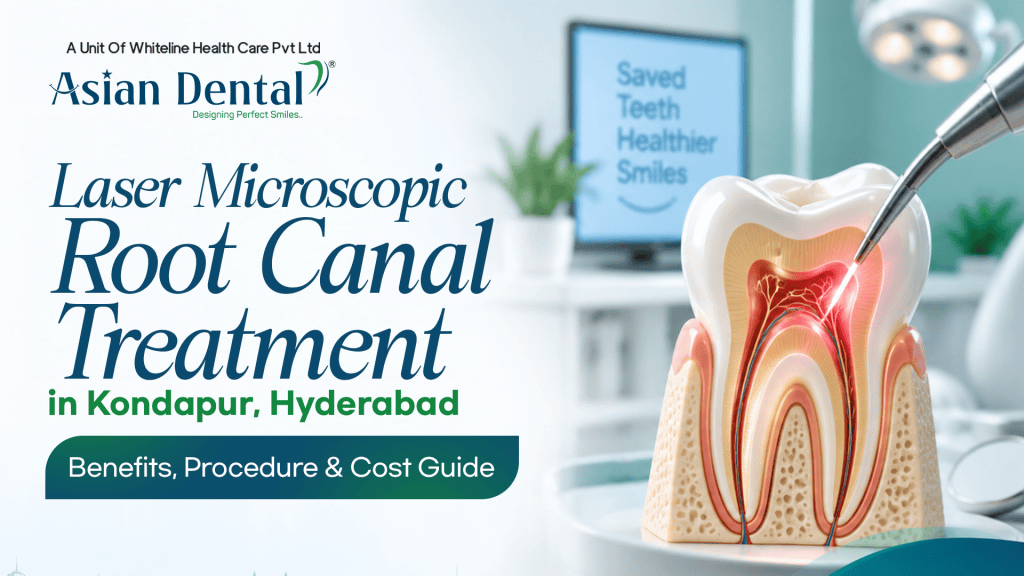
A root canal treatment is a common dental procedure used to save a tooth affected by deep decay, infection, or damage to the dental pulp. With modern dental technology, laser microscopic root canal treatment in Kondapur, Hyderabad can provide a more precise approach to cleaning and treating infected root canals.
At Asian Dental, advanced dental technology, magnification, and laser-assisted techniques can be used to help dentists work carefully inside the tooth. This approach may be suitable for patients who need accurate root canal treatment while preserving as much healthy tooth structure as possible.
What Is Laser Microscopic Root Canal Treatment?
Laser microscopic root canal treatment combines dental microscopy with laser technology during root canal therapy.
A dental operating microscope provides high magnification and illumination, allowing the dentist to clearly view the tiny structures inside the tooth. A dental laser can assist with cleaning and disinfecting areas of the root canal system.
Traditional root canal treatment already has a high success rate when properly performed. Microscopic and laser-assisted techniques are advanced approaches that may help the dentist identify small canals, cracks, calcifications, and other details that may be difficult to see with the naked eye.
At Asian Dental in Hyderabad, patients can discuss whether microscopic and laser-assisted root canal treatment is appropriate for their particular dental condition.
Why Is Root Canal Treatment Needed?
The innermost part of a tooth contains soft tissue called dental pulp. When bacteria reach the pulp because of deep decay, cracks, trauma, or repeated dental procedures, the pulp can become inflamed or infected.
Common symptoms may include:
- Persistent toothache
- Sensitivity to hot and cold
- Pain while biting or chewing
- Swelling around the tooth
- Tender or swollen gums
- Darkening of the tooth
- Pus or a bad taste in the mouth
- A dental abscess
Sometimes an infected tooth may not cause noticeable pain. A dentist may identify the problem through an examination and dental X-ray.
Early diagnosis can help prevent the infection from spreading and may improve the chances of saving the natural tooth.
Benefits of Laser Microscopic Root Canal Treatment
1. Better Visibility
One of the major advantages of microscopic dentistry is improved visibility. The dental microscope magnifies the treatment area and provides better illumination.
This can help the dentist locate small or hidden canals and work with greater precision.
2. Precise Treatment
Root canal systems can be complex. Some teeth have curved, narrow, or additional canals.
Microscopic magnification can help the dentist carefully navigate these structures and perform treatment more accurately.
3. Enhanced Cleaning and Disinfection
Lasers may be used as an additional method for reducing microorganisms within the root canal system.
The laser does not replace conventional cleaning and irrigation methods. Instead, it can be used as part of an overall root canal treatment protocol when clinically appropriate.
4. Helps Preserve Natural Teeth
The primary goal of root canal treatment is to remove infected tissue and preserve the natural tooth.
Saving the natural tooth can help maintain normal chewing function and avoid extraction when the tooth is restorable.
5. Useful for Complex Cases
Microscopic treatment can be particularly helpful when dealing with complicated root canal anatomy, previously treated teeth, calcified canals, or certain retreatment cases.
Your dentist will determine whether advanced microscopic treatment is required based on the condition of the tooth.
Laser Microscopic Root Canal Treatment Procedure
The exact procedure varies depending on the tooth and severity of infection. Generally, the treatment involves several steps.
Step 1: Dental Examination
The dentist first examines the tooth and discusses your symptoms and dental history.
Digital X-rays or other imaging may be recommended to understand the root structure and identify signs of infection.
Step 2: Local Anesthesia
Local anesthesia is administered to numb the tooth and surrounding area.
This helps make the procedure more comfortable for the patient.
Step 3: Isolation of the Tooth
A rubber dam may be placed around the tooth. This keeps the treatment area clean and dry and helps prevent saliva and bacteria from entering the root canal.
Step 4: Accessing the Root Canal
A small opening is created in the tooth to reach the infected pulp chamber.
Using a dental microscope can provide better visibility while locating the canal openings.
Step 5: Cleaning and Shaping
The infected or damaged pulp tissue is removed.
Specialized dental instruments are used to clean and shape the root canals so that they can be properly disinfected and filled.
Step 6: Laser-Assisted Disinfection
When appropriate, laser technology may be used as an additional disinfection method.
The laser energy is carefully applied according to the dentist’s treatment protocol. This step is intended to help reduce microorganisms within areas of the root canal system.
Step 7: Filling the Root Canals
After thorough cleaning and disinfection, the canals are sealed with a suitable root canal filling material.
Proper sealing helps prevent bacteria from entering the treated canal system again.
Step 8: Final Restoration
After root canal treatment, the tooth usually needs a permanent restoration.
Depending on the amount of tooth structure remaining, the dentist may recommend a filling, onlay, or dental crown. A crown can provide additional protection for many root-treated teeth, particularly back teeth that experience significant chewing forces.
How Long Does Laser Microscopic Root Canal Treatment Take?
Treatment time depends on the tooth, number of canals, complexity of the root anatomy, and presence of infection.
Some straightforward cases may be completed in a single appointment, while more complex cases may require multiple visits.
Teeth with curved canals, severe infection, previous root canal treatment, or complicated anatomy may require additional treatment time.
Your dentist at Asian Dental can provide a more specific treatment schedule after examining your tooth.
Is Laser Microscopic Root Canal Treatment Painful?
Modern root canal treatment is performed under local anesthesia, so patients generally should not feel sharp pain during the procedure.
Some mild tenderness or sensitivity may occur after treatment. This usually improves as the surrounding tissues recover.
If you experience severe or persistent pain, swelling, or other unusual symptoms after treatment, contact your dentist for an evaluation.
Laser Microscopic Root Canal Treatment Cost in Kondapur, Hyderabad
The cost of laser microscopic root canal treatment in Kondapur, Hyderabad can vary considerably from patient to patient.
Factors that may influence the cost include:
- Type of tooth
- Number of root canals
- Complexity of the case
- Severity of infection
- Whether it is a first-time root canal or retreatment
- Use of microscopic technology
- Laser-assisted procedures
- Dental imaging requirements
- Type of final restoration
- Whether a dental crown is required
Because every case is different, it is difficult to provide one fixed price for all patients.
During your consultation at Asian Dental, the dentist can examine the tooth, explain the recommended treatment, and provide a personalized cost estimate.
Laser Root Canal vs. Conventional Root Canal Treatment
Both conventional and advanced root canal procedures have the same fundamental objective: remove infection, clean the root canal system, seal the tooth, and preserve the natural tooth whenever possible.
The main difference is the technology and techniques used during treatment.
Microscopic root canal treatment provides enhanced magnification and illumination. Laser-assisted treatment may be used as an additional disinfection technique.
However, laser technology does not automatically mean that every root canal case will have a better outcome. The dentist’s diagnosis, treatment planning, cleaning and shaping, proper sealing, and final restoration all play important roles in treatment success.
Who May Need Microscopic Root Canal Treatment?
Microscopic root canal treatment may be considered for patients with:
- Complex root canal anatomy
- Very narrow or calcified canals
- Additional or hidden canals
- Curved roots
- Previously treated teeth
- Root canal retreatment needs
- Persistent infection after previous treatment
- Difficult-to-locate canals
- Certain dental trauma cases
A dental examination is necessary to determine whether this advanced approach is appropriate.
Aftercare Following Root Canal Treatment
Following your root canal procedure, your dentist may recommend some simple precautions.
Avoid chewing hard or sticky foods on the treated tooth until the permanent restoration is completed. Maintain regular brushing and flossing, and attend follow-up appointments as advised.
If a crown has been recommended, completing the final restoration on time is important because a root-treated tooth may be more vulnerable to fracture depending on how much natural tooth structure remains.
Regular dental check-ups can also help monitor the treated tooth and surrounding tissues.
Why Choose Asian Dental for Root Canal Treatment?
Choosing the right dental clinic is an important part of receiving root canal care.
Asian Dental offers dental consultation and treatment using modern dental techniques and technology. Patients considering microscopic or laser-assisted root canal treatment can discuss their symptoms, treatment options, expected appointments, and estimated costs with the dental team.
The dentist can also explain whether conventional root canal treatment or an advanced microscopic approach is more appropriate for your particular tooth.
Frequently Asked Questions
1. What is laser microscopic root canal treatment?
It is an advanced root canal approach that combines dental magnification with laser-assisted techniques to help clean, treat, and disinfect the root canal system.
2. Is laser root canal treatment better than conventional treatment?
Laser technology can be useful as an additional treatment method, while microscopic magnification can improve visibility. The appropriate technique depends on the individual case and the dentist’s clinical assessment.
3. How much does a laser microscopic root canal cost in Kondapur?
The cost varies depending on the tooth, complexity, infection, technology used, and final restoration required. Asian Dental can provide an individual estimate after examination.
4. How many appointments are required?
Some root canal cases can be completed in one appointment, while complex cases may require multiple visits.
5. Will I need a crown after root canal treatment?
A crown may be recommended depending on the location of the tooth and the amount of remaining tooth structure. Your dentist will advise you based on your individual case.
Final Thoughts
Laser microscopic root canal treatment in Kondapur, Hyderabad combines advanced magnification with laser-assisted techniques to support precise cleaning and treatment of complex root canal systems. It can be considered for challenging cases where detailed visibility and additional disinfection techniques may be helpful.
If you have persistent tooth pain, sensitivity, swelling, or a previously treated tooth that is causing problems, consult a dentist for an evaluation. Asian Dental can assess your tooth, explain the available root canal options, and provide a treatment plan based on your dental needs.
For advanced laser microscopic root canal treatment in Kondapur, Hyderabad, visit Asian Dental Hospital. Call +91 9959287499 to book your appointment.


