
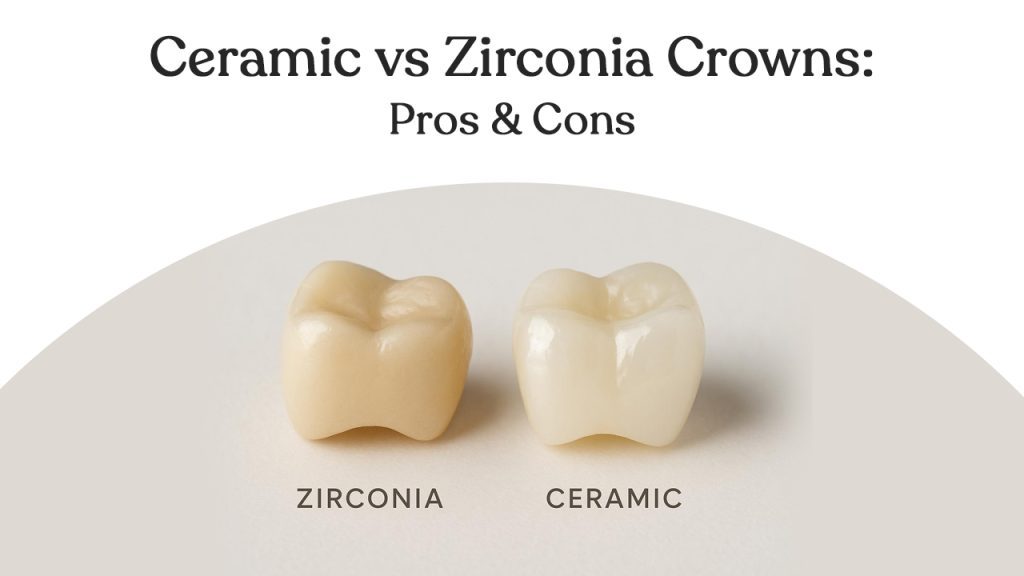
Ceramic. Zirconia. Neither word meant a thing to you until your dentist said one of them has to go on your tooth. Choosing between ceramic vs zirconia crowns comes down to one real question: what does this specific tooth need to survive?
A ceramic crown is built to disappear into your smile. A zirconia crown is built to survive whatever you throw at it while chewing. Picking wrong isn’t a disaster, but it can mean redoing the work sooner than you’d like.
At Asian Dental, Kondapur and Kukatpally in Hyderabad, Dr. Nadimpalli Himaja checks the tooth, the bite, and the wear pattern before settling on either one. Read on for how these two crowns differ, what changes the cost, and which tooth suits which material.
What Is the Difference Between Ceramic and Zirconia Crowns?
Ceramic and zirconia crowns differ in what they’re made from and what that stuff does well. Ceramic crowns are built mostly for looks. Zirconia crowns are built mostly for strength. Newer zirconia versions are closing that looks gap too, but strength is still the main draw.
What Ceramic Crowns Are Made Of?
Ceramic crowns are made from porcelain or glass-based materials. Dentists often layer these for a natural, tooth-like glow. Light passes through a ceramic crown almost the way it passes through real enamel. That glow is what makes ceramic so convincing on front teeth. Ceramic crowns also contain no metal. That means no grey line at the gum edge years later.
What Zirconia Crowns Are Made Of?
Zirconia crowns are milled from zirconium dioxide. This is a dense ceramic material. It started out in industrial engineering before dentistry adopted it. Zirconium dioxide lets through far less light than porcelain does. Newer high-translucency zirconia has closed some of that gap. What zirconia gives up in glow, it tends to make up for in raw strength.
What Are the Pros and Cons of Ceramic Crowns?
Ceramic crowns give you the most natural-looking smile. That same delicacy is their biggest weakness, though.
Pros:
- Matches natural tooth shade and glow closely
- Contains no metal, so there’s no grey line at the gum
- Feels smooth and comfortable against the tongue and cheek
- Bonds well to the remaining tooth structure
Cons:
- More prone to chipping under heavy bite force
- Less ideal for molars or for patients who grind their teeth
- May need replacement sooner in high-pressure areas of the mouth
What Are the Pros and Cons of Zirconia Crowns?
Zirconia crowns are built to handle heavy chewing. That strength brings its own trade-offs too. For a deeper look at the material itself, this guide on everything you need to know about zirconia crowns covers it in more depth.
Pros:
- Highly resistant to chipping and cracking
- Handles heavy bite force well, including grinding habits
- Needs less removal of healthy tooth structure than some materials
- Holds up well as a base for bridges too
Cons:
- Less see-through than porcelain, though newer versions improve this
- Can wear down opposing natural teeth if the surface isn’t polished well
- Color matching gets trickier on very visible front teeth
Which Crown Is Better for Front Teeth or Back Teeth?
Front teeth usually suit ceramic crowns better. Back teeth usually suit zirconia crowns better. A dental crown in Kondapur or Kukatpally usually starts with exactly this question, since your bite and any grinding habit can still change the answer.
| Factor | Front Teeth | Back Teeth |
| Main priority | Looks and glow | Strength and bite force |
| Often suited to | Ceramic | Zirconia |
| Switch to zirconia if | Bruxism or trauma risk is high | Rarely needed |
| Switch to ceramic if | Rarely needed | Bite force is light and looks matter |
Bruxism changes this picture on its own. Grind your teeth at night, and a zirconia crown may hold up better, even on a front tooth. Chip resistance starts to matter more than glow once grinding enters the picture. A dentist can check for grinding wear during a routine exam, even if you’ve never noticed it yourself.
Either crown still needs normal care once it’s fitted. Brush and floss around it like you would a natural tooth, and try not to bite into very hard foods like ice or hard candy. Neither material is indestructible, even if zirconia comes close.
How Much Do Ceramic and Zirconia Crowns Cost?
Zirconia crowns usually cost more than ceramic crowns. A ceramic vs zirconia crown price comparison depends on your tooth, though, not a fixed rate card. Most patients getting dental crown treatment in Hyderabad ask about cost before anything else, and a few things move that number:
- Tooth location and how much preparation it needs
- Whether it’s basic or high-glow zirconia
- Lab work and the number of visits involved
- Whether the crown sits on a natural tooth or an implant
- How many crowns you need in one visit
The final cost depends on tooth condition, material choice, and case complexity. Your dentist gives an exact estimate only after examining the tooth, not before. If you’re comparing quotes, ask what’s actually included, since lab fees and follow-up visits aren’t always bundled the same way everywhere. This breakdown of dental crown types and cost in Hyderabad walks through the same factors in more detail. That’s really what a ceramic vs zirconia crown price question comes down to: the case in front of your dentist, not a catalog.
Book Your Dental Crown Consultation with Asian Dental in Hyderabad
Every crown pick at Asian Dental starts with an exam. Dr. Nadimpalli Himaja, a prosthodontist, checks your bite, your tooth, and how hard you clench or grind. That exam decides the pick, not a guess. If you’re searching for dental crown treatment in Hyderabad, both branches run this same check first.
Looking for a dental crown in Kondapur specifically? That’s where Dr. Himaja practices most days, alongside the wider Kukatpally team. Patients researching dental crown treatment in Kondapur usually come in after a cracked filling or a root canal that needs a protective cap. A dental crown consultation at Asian Dental starts with the same exam either way, whether you need one crown or several. If dental crown treatment in Kondapur is what brought you here, that same exam is where your visit will start too.
Typing dental crown near me late at night with a sore tooth? Both branches stay open all seven days, 10 AM to 9 PM. Looking for dental crown in Kukatpally specifically? The Kukatpally branch handles the same range of ceramic and zirconia options as Kondapur does. Either way, dental crown near me searches usually end at whichever branch is closer to home that day.
Call Asian Dental, Kondapur at +91 9959287499 or Kukatpally at +91 91002 50777 to book your crown evaluation. A dental crown in Kukatpally or Kondapur gets the same exam, the same materials, and the same honest answer either way.
Frequently Asked Questions
Which Crown Lasts Longer, Ceramic or Zirconia?
Zirconia crowns generally hold up longer under heavy chewing. The material resists chipping better than porcelain does. Ceramic crowns can still last many years on front teeth, where bite force is lighter. Location in the mouth matters more than the material alone.
Can Zirconia Crowns Look Natural on Front Teeth?
Yes, especially with newer high-translucency zirconia. It won’t match porcelain’s glow exactly, but that gap has narrowed a lot in recent years.
Do Ceramic Crowns Chip Easily?
Not under normal biting. Heavy grinding or biting hard objects raises the risk. That’s why dentists often steer ceramic toward front teeth and lighter bite zones. Zirconia usually takes the molars under heavy pressure instead.
Is Zirconia Crown Treatment Painful?
No more than any standard crown procedure. You’ll get local anesthesia during tooth preparation. Most discomfort afterward is mild and short-lived.
How Long Does a Crown Procedure Take?
Getting a crown usually takes two visits. The first visit preps the tooth and takes an impression, then fits a temporary crown. The permanent one gets made in a lab during the wait. The second visit, often one to two weeks later, fits and adjusts the final crown. Some clinics offer same-day options, though that depends on the lab workflow available at the time.
Which Crown Is Better for a Tooth That Had Root Canal Treatment?
Both crowns can work on a tooth that’s had root canal treatment. The choice depends on how much tooth is left. Zirconia is often preferred here, since these teeth tend to be more brittle. Extra strength helps protect what’s left. Your dentist checks what’s left with an exam before deciding. A weak tooth sometimes needs a support post first.