
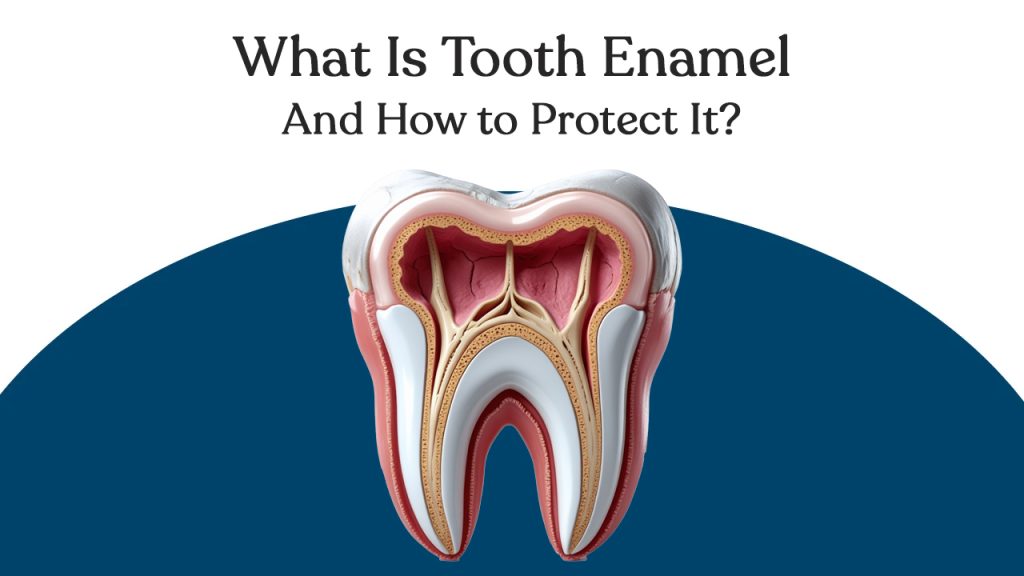
Your teeth have been sending signals for a while now. Cold water hits a little too hard. A front tooth looks slightly see-through at the edge. Tooth enamel is the hard outer shell of every tooth and those signals mean it’s already thinning.
It’s the only tissue that can’t repair itself. Once it’s gone from an area, it doesn’t come back. The problem is that erosion is almost entirely silent until it’s already significant. By the time sensitivity or translucency appears, months of damage have already built up.
At Asian Dental, our team uses laser diagnostic technology and gold-standard instruments under a 4-step WHO-compliant sterilisation protocol to catch enamel loss before conservative options close. With over 200 laser treatments performed, this guide by our expert dentists at Asian Dental Hyderabad tells you exactly what enamel is, what’s destroying it, and how to protect and restore it before it’s too late.
What Exactly Is Tooth Enamel and Why Does It Matter?
Tooth enamel is the hard outer layer covering every tooth, built almost entirely from a mineral called hydroxyapatite. It is a calcium phosphate compound arranged in tightly packed crystalline rods.
Because enamel has no living cells, and is harder than bone, there’s no biological repair process waiting to fix what’s lost. That’s what makes early detection so important.
The table below shows how enamel compares to dentin:
| Property | Enamel | Dentin |
| Hardness | Highest in the body | Softer than enamel |
| Living cells | None | Yes |
| Self-repair | Not possible | Partial |
| Role | Protective outer shell | Structural inner layer |
What Is Silently Destroying Your Enamel Every Day?
Acid is the main cause and most patients are exposed to it far more often than they realise. According to a 2022 study published in Frontiers in Dental Medicine, dental erosion affects nearly 30% of adults worldwide, with soft drink consumption as the leading driver.
- Acid reflux and frequent vomiting bring stomach acid into the mouth and directly onto tooth surfaces. It’s one of the most aggressive causes of enamel erosion.
- Sipping acidic drinks does more damage than drinking them in one go. A glass of cola finished in ten minutes means ten minutes of acid contact. The same glass sipped over an hour means sixty minutes of continuous acid exposure, with no recovery window.
- Dry mouth removes the enamel’s natural defence system. If your mouth feels consistently dry, it’s worth raising at your next appointment.
- Night grinding, or bruxism (clenching and grinding teeth during sleep ) wears enamel off biting edges without you ever noticing.
- Brushing straight after eating is a habit many people think is healthy. Brushing during that window abrades an already weakened surface. Rinse with water immediately after eating. Wait 30 to 45 minutes before you brush.
- Sports drinks and citrus fruit consumed habitually are frequently overlooked. Many sports drinks carry a pH low enough to begin enamel softening within minutes.
How Can You Protect Tooth Enamel Going Forward?
Protecting tooth enamel comes down to cutting acid contact time, strengthening the surface you still have, and managing the habits that are wearing it down.
- Use fluoride toothpaste twice a day, every day.
- Finish acidic drinks in one sitting.
- Wear a night guard if you grind.
- Treat dry mouth as the medical issue it is.
- Manage acid reflux with your doctor.
Can You Actually Restore Tooth Enamel Once It’s Lost?
Enamel can’t grow back on its own, but clinical restoration can rebuild the protection depending on how much structure remains and where the damage sits. The earlier a dentist catches it, the simpler the fix.
The table below shows the stage-by-stage clinical path for enamel teeth repair:
| Stage | What’s Happening | Treatment at Asian Dental |
| Early demineralisation | Surface softening, structure intact | In-clinic fluoride therapy + home protocol |
| Dentin exposure | Sensitivity starts, slight yellowing | Composite bonding or GIC restoration |
| Visible erosion | Translucent edges, minor chipping | Veneers (front) or onlays (back) |
| Structural compromise | Fracture risk, bite pain | Dental crowns |
| Severe multi-tooth wear | Multiple teeth affected, bite altered | Full mouth rehabilitation |
Book an Enamel Assessment at Asian Dental in Hyderabad
If anything in this guide sounds familiar, book a consultation now. Waiting doesn’t stabilise enamel loss. It just narrows the options available when you do come in.
Our super-speciality dental team at Asian Dental assesses enamel using laser diagnostic technology and a 4-step WHO sterilisation protocol. Every case is reviewed with gold-standard instruments before any treatment is planned. Four branches across two cities carry the same clinical standard and the same specialist team. Wherever you are, the assessment is the same.
To connect, call the best dental hospital in Kukatpally and Kondapur
Kondapur No. +91- 99592 87499
kukatpally No. +91- 91002 50777
Frequently Asked Questions
Can tooth enamel grow back naturally?
No. Enamel has no living cells and no biological repair process. In early demineralisation, fluoride treatment can remineralise and reharden the surface, but this only works while structural enamel is still present. Once it’s fully gone from an area, clinical restoration is the only path forward.
What are the first signs that enamel is eroding?
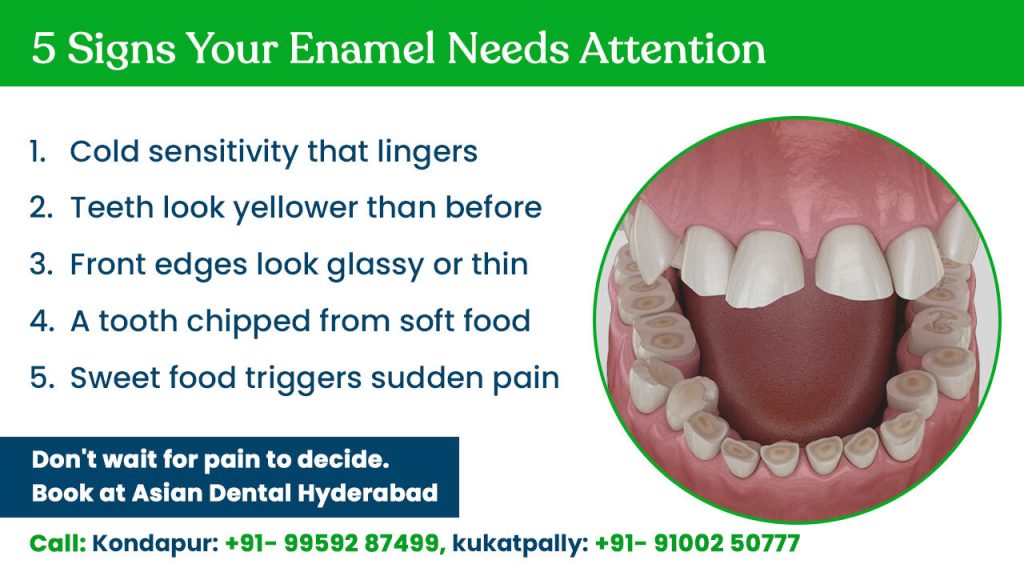
Cold sensitivity that lingers longer than a few seconds, teeth that look more yellow despite regular brushing, translucency at the edges of front teeth, and chipping from foods that shouldn’t cause chips. These signs appear before pain does, which is why early assessment matters.
Is enamel erosion reversible?
Surface demineralisation is partially reversible with fluoride therapy. Structural enamel loss isn’t reversible. Clinical restoration addresses it through bonding, veneers, or crowns depending on how much has been lost and where.
Does acidic food damage enamel straight away?
Yes, every acid exposure causes temporary demineralisation. Saliva remineralises the surface in about thirty minutes if the acid exposure stops. Damage accumulates when acid contact is frequent or prolonged multiple acidic meals a day, sipping drinks over long periods, or untreated acid reflux.


